
Esta página atualmente só está disponível em inglês.

Publications
Here are some of the peer-reviewed publications from the SALURBAL study.
Latest Publications
This study analyzes urban infrastructure for physical activity in Greater Santiago, Chile, revealing an uneven distribution. Green spaces, active transport, and safety are concentrated in wealthier areas, while public transport access is more evenly shared across income levels.
This study examines HIV/AIDS mortality in 315 Latin American cities, highlighting its concentration in large urban areas and exploring links with deprivation and income inequality. It addresses the lack of research on urban HIV/AIDS mortality trends in Latin America.
This study examines river flood risk in 363 Latin American cities, finding that 6.9% of nearly 298 million urban residents face significant exposure. Children under 10 are most vulnerable, and flood risk is concentrated in specific city areas, highlighting critical hotspots for disaster planning.
This study assesses liveability along Bogotá’s 7th Street before the Green Corridors project begins. It explores how social and built environment factors affect residents' experiences and identifies potential solutions to improve sustainability and urban design as part of the 2022-2035 Land Use Master Plan.
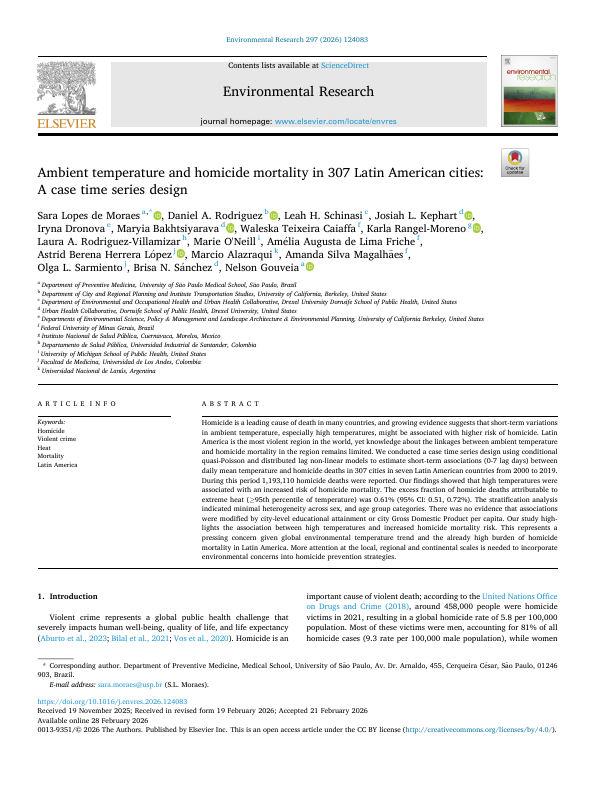
High temperatures are linked to increased risk of homicide mortality in Latin America, with extreme heat contributing to 0.61% of deaths. This highlights the need for environmental considerations in homicide prevention strategies in the region.
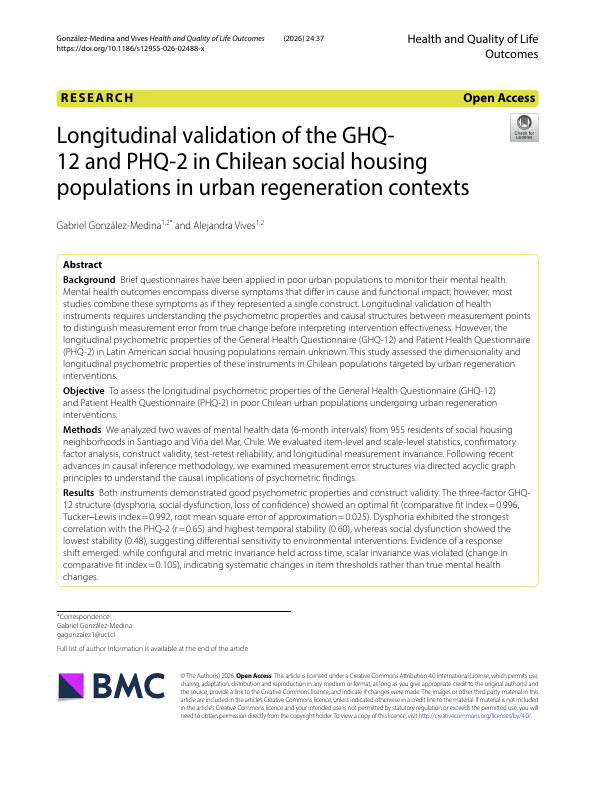
This study evaluates the dimensionality and longitudinal psychometric properties of the GHQ-12 and PHQ-2 mental health questionnaires in Chilean social housing populations. It highlights the importance of distinguishing true change from measurement error to accurately monitor mental health outcomes in poor urban communities undergoing regeneration.
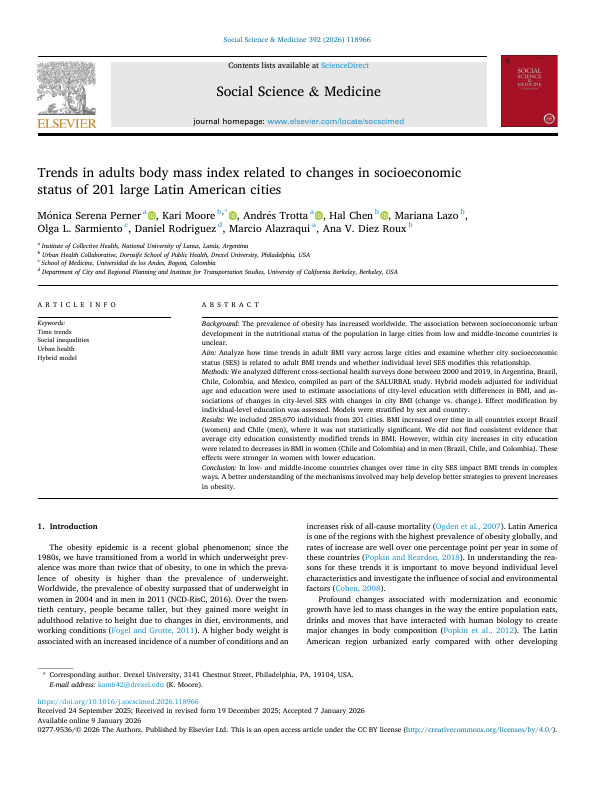
Global obesity rates are rising, but the impact of urban development on nutrition in low to middle-income cities is not well understood.
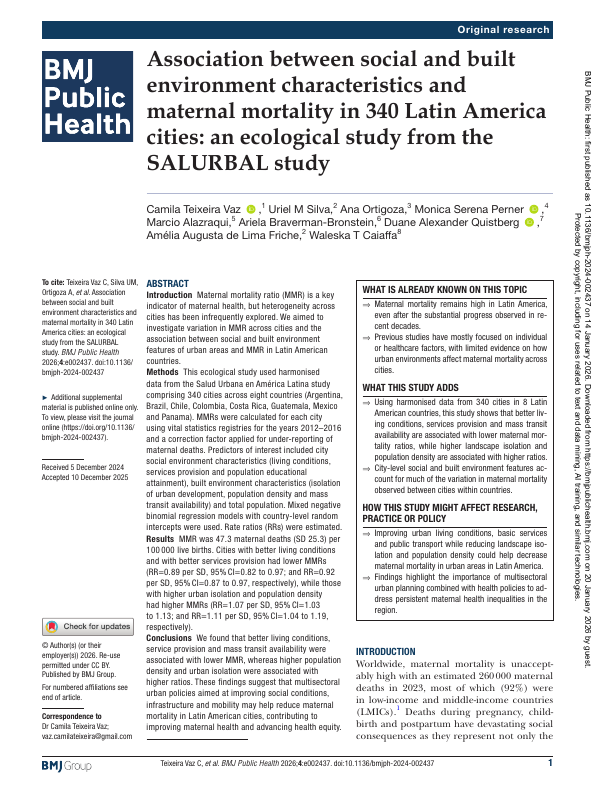
Study of 340 cities in Latin America found that better living conditions and services, along with mass transit availability, were associated with lower maternal mortality ratios. Conversely, higher urban isolation and population density were linked to higher ratios. Urban policies targeting social conditions and infrastructure could help reduce maternal mortality and promote health equity.
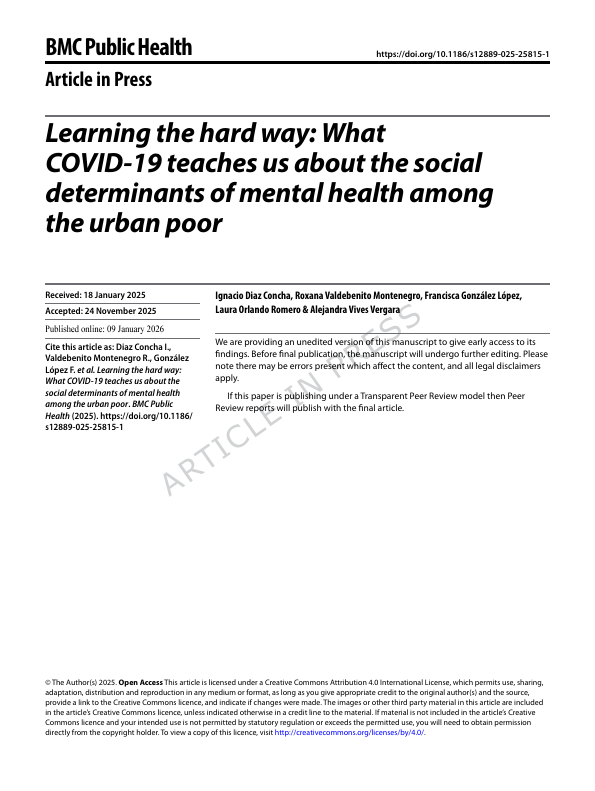
Study examines poor mental health among urban-poor homemakers in Santiago, Chile during COVID-19 crisis, highlighting effects of social and economic disparities.
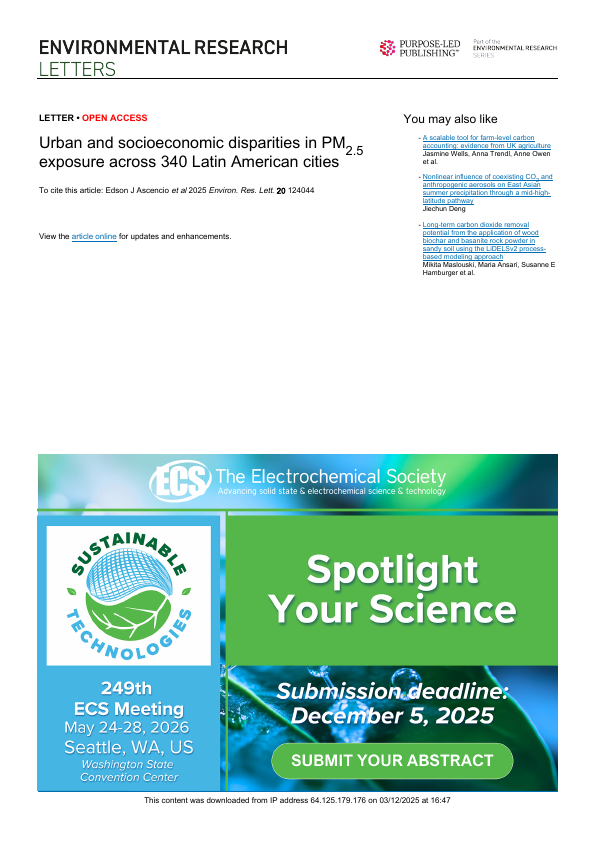
Study analyzed PM2.5 levels in 53,041 neighborhoods across 340 Latin American cities. Neighborhoods with higher PM2.5 had higher education levels, more intersections, and were in older cities. Lower levels were found in denser areas with more green space further from city centers.
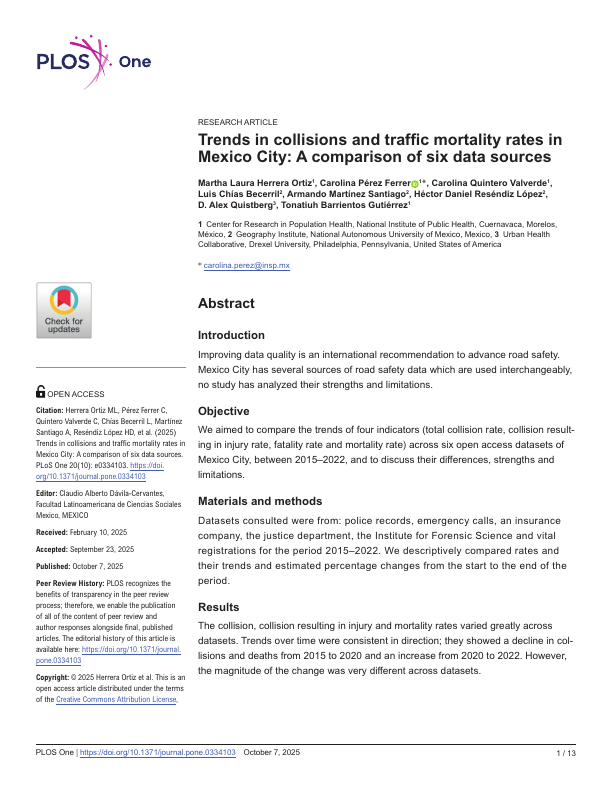
Study in Mexico City evaluates strengths and limitations of road safety data sources, emphasizing need for improved data quality to enhance road safety efforts internationally.
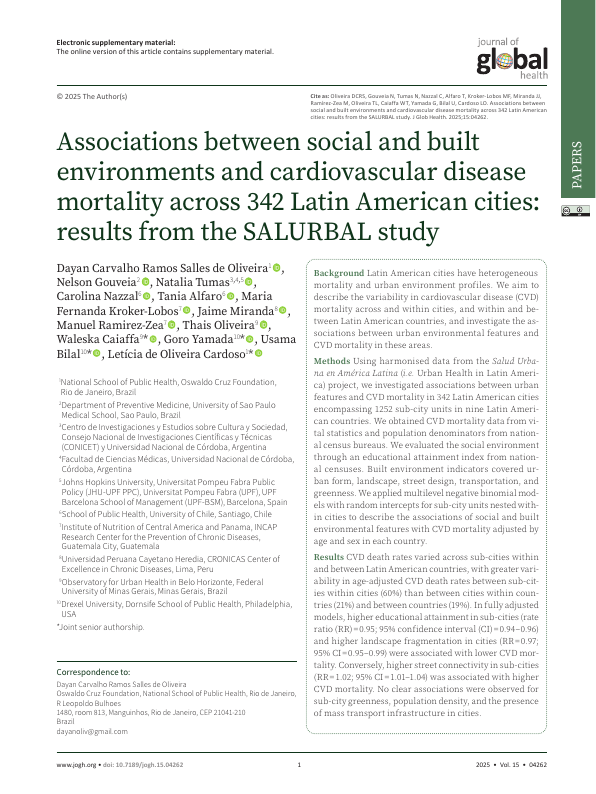
This study explores variations in cardiovascular disease mortality across Latin American cities and countries, examining how different urban environmental factors influence these mortality rates within and between cities.
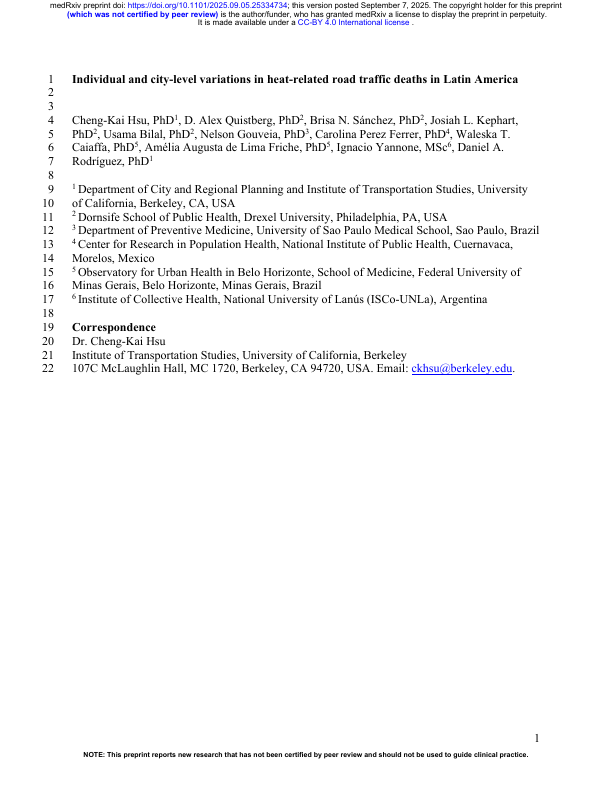
Study in Latin America found higher road-traffic mortality at extreme temperatures. Risks are higher in hotter climates, longer commutes, among certain groups. Policymakers urged to protect vulnerable road users in peripheral areas.
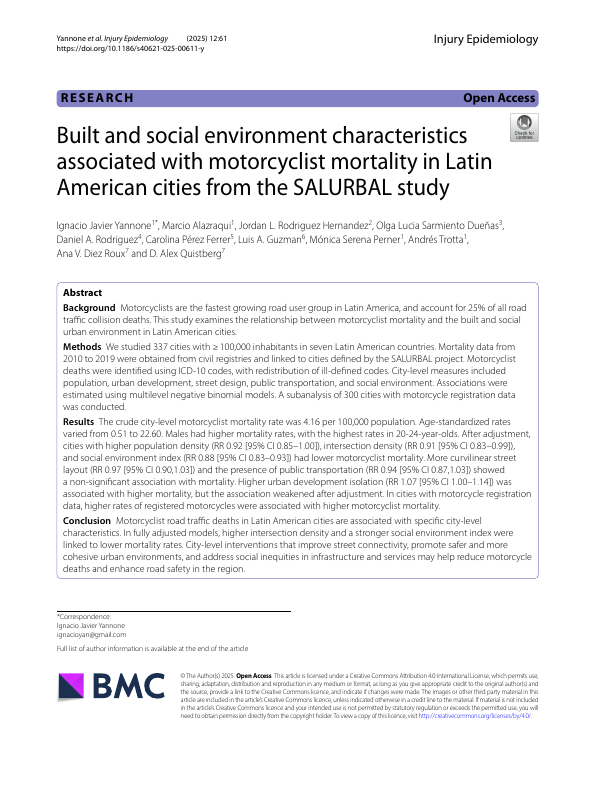
Study in Latin American cities found motorcyclist mortality linked to urban characteristics. Higher population density, intersection density, and social environment index associated with lower mortality rates. Improving street connectivity and promoting safer urban environments may reduce motorcycle deaths and enhance road safety.

In Latin America, climate change, urbanization, and an aging population are increasing health risks from extreme temperatures. Accurate assessment of future temperature-related mortality impacts requires integrating demographic factors like population age composition and mortality rates.
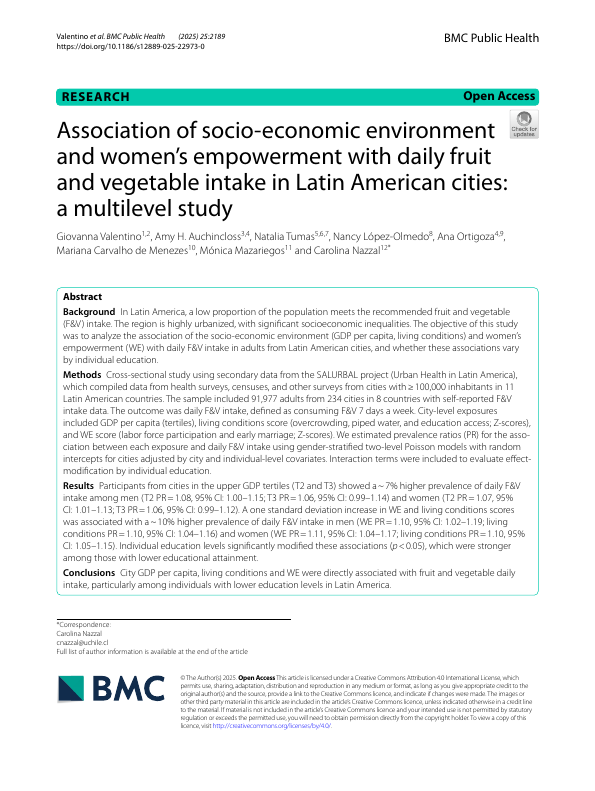
Study in Latin American cities found low F&V intake, linked to GDP, living conditions, women's empowerment, and education levels.
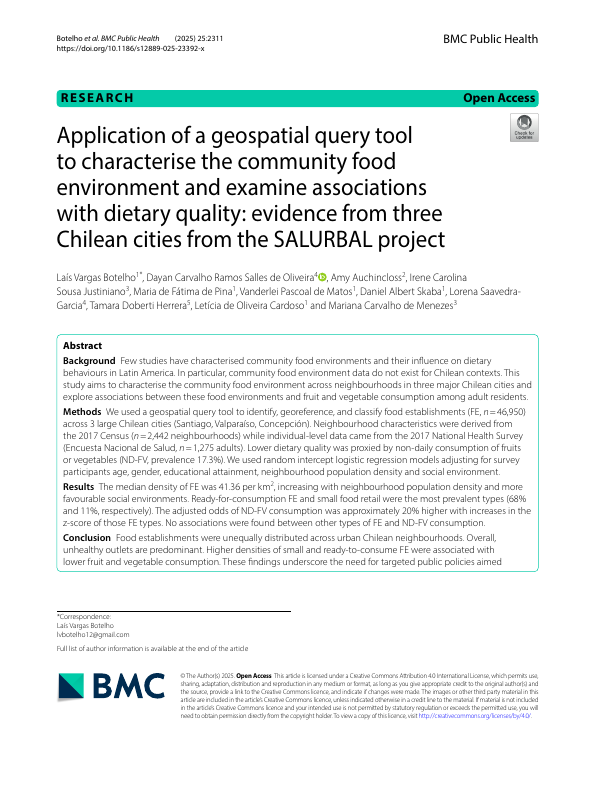
This study aims to explore the community food environments in Chilean cities and their impact on fruit and vegetable consumption among adults, filling a gap in current research on dietary behavior in Latin America.
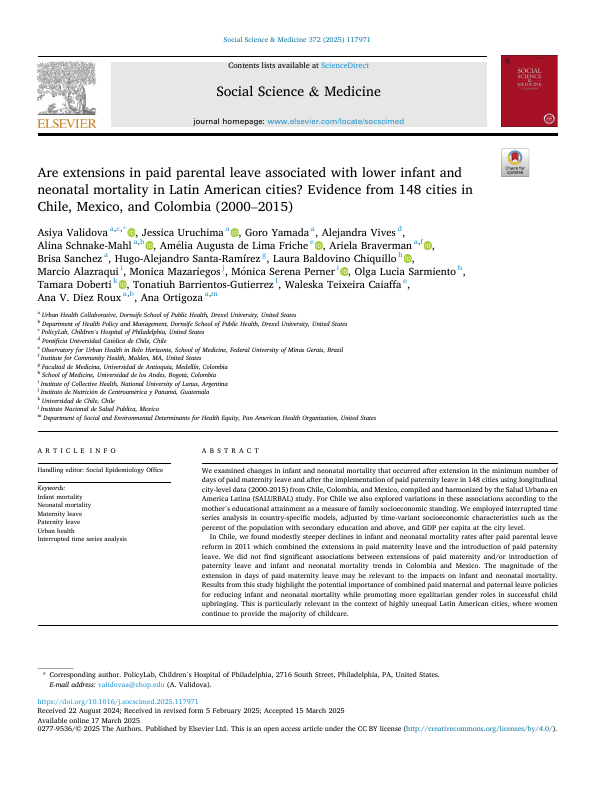
Study on parental leave policy impact on infant mortality in 3 countries found steeper declines in Chile after paid parental leave reform, but no significant changes in Colombia and Mexico. Results suggest combined paid maternal and paternal leave policies could reduce infant mortality and promote gender equality in childcare.
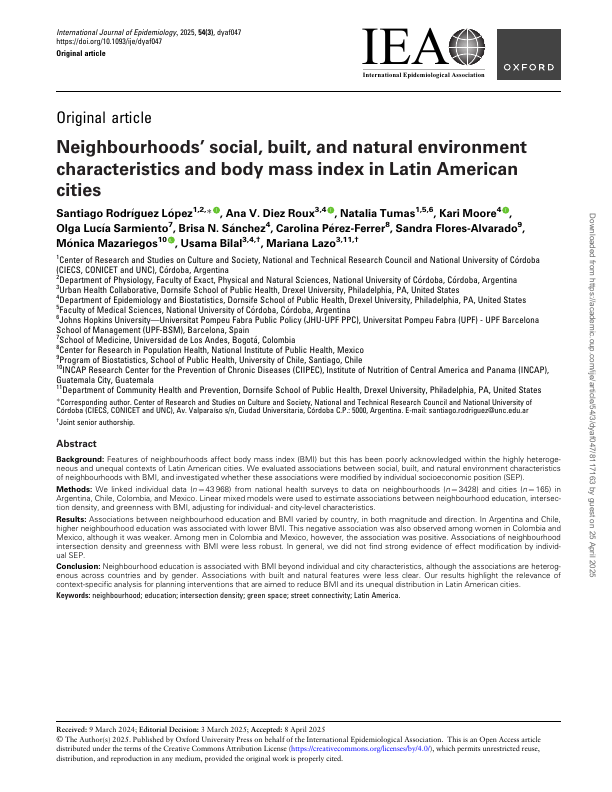
Study examines how neighborhood characteristics in Latin American cities impact BMI, considering social, built, and natural elements, and how individual socioeconomic status can influence these associations.
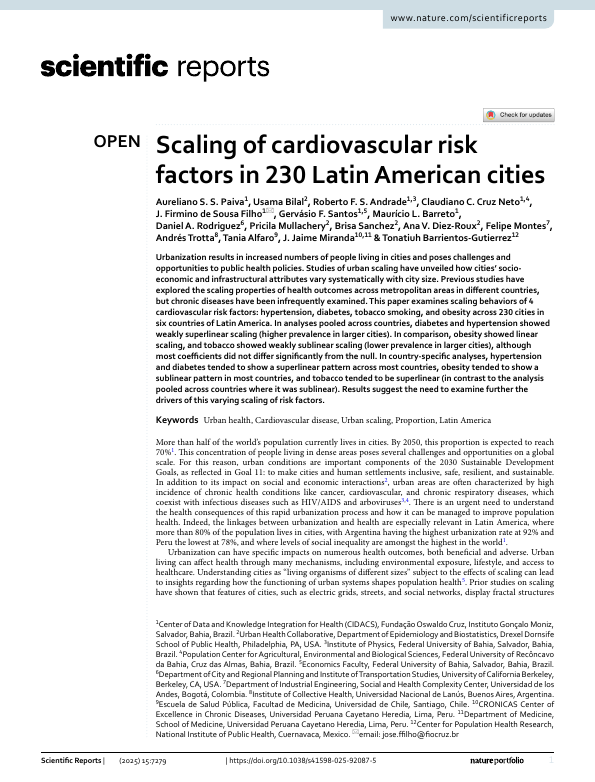
This paper examines the scaling behavior of cardiovascular risk factors across 230 cities in Latin America. Diabetes and hypertension tend to increase with city size, while obesity decreases and tobacco use varies. Results suggest the need for further research on the drivers of these patterns.