

The SALURBAL Network
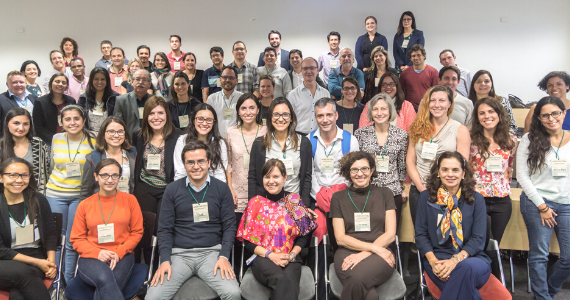
The SALURBAL Network (formerly the Urban Health Network for Latin America and the Caribbean, LAC-Urban Health) brings together researchers, practitioners, and policymakers to promote urban health and health equity across Latin America.
The SALURBAL Network distributes research findings and other relevant information about the connections between urban environments, health, and health equity, and shares regular opportunities for learning, capacity building, and exchange.
History
The Network was first convened by Drexel University's Dornsife School of Public Health in September 2015, and co-sponsored for the first three years by the United Nations University Institute for Global Health and the Economic Commission for Latin America and the Caribbean (UN-ECLAC).
LAC-Urban Health convened periodically to share research results and explore training and other collaborative opportunities. A group of Network members subsequently developed the Salud Urbana en América Latina (SALURBAL) project, which was made possible by funding from the Wellcome Trust's Our Planet, Our Health initiative and has made many network foundational aims a reality. Through SALURBAL and other activities, LAC-Urban Health has continued to support its members as they develop research, training, and dissemination. Read more about the SALURBAL Story.
The Network continues to promote regional and multisectoral collaboration in order to generate evidence on the drivers of urban health and health equity and translate this evidence into policies to improve health across cities in Latin America and the Caribbean.
To see a full list of SALURBAL Network members, please visit: https://drexel.edu/lac/about/network/members/
Guiding Principles
The SALURBAL Network and our activities continue to be guided by our founding principles:
- DESCRIBE the state of urban health in Latin America and the Caribbean by comparing cities over time and across countries.
- UNDERSTAND the processes of urbanization (and its potential health consequences), placing it in the historical, social, economic, and political contexts of the region.
- EMPHASIZE the multidimensional nature of urban health, its roots in social, economic, political, and environmental factors, and the need to develop integrated solutions to health challenges that span multiple sectors.
- IDENTIFY and ADDRESS inequities in health both within and across cities.
- PROMOTE training and mentorship within the network and INVEST in capacity building.
- APPLY diverse methodologies, including quantitative, qualitative, and historical analyses, as well as the evaluation of natural experiments and systems modelling.
- EVALUATE a range of policies in cities in Latin America and the Caribbean to gain knowledge on their health impacts and to learn about the drivers of urban health in general.
- VALUE place-centered approaches to urban health and the role of place-based policies, programs, and interventions.
- SUPPORT partnerships between researchers, decision-makers, and communities, and a new way of thinking about the links between research and action.

Network logo, 2015-2023